Installed artificial grass in Arizona typically costs $8–$20 per square foot, with most homeowners spending $10,000–$25,000 for a standard backyard. The final number depends on turf grade, ground preparation complexity, and any add-ons like borders or putting green contouring.
What Does Artificial Grass Actually Cost?
The "$5 per square foot" quotes you see advertised are almost always just the turf material — sitting in a box, uninstalled. By the time you add base preparation, labor, infill, edging, and other materials, the real all-in cost is significantly higher. That gap is where most homeowners get surprised.
A better framing: think of artificial grass as a long-term home improvement, not a lawn purchase. The total installed cost for an average Phoenix-area backyard runs $10,000–$25,000. That sounds like a lot until you factor in that you'll never pay for water, mowing, fertilizer, or re-seeding again — for 20+ years.
Breaking Down the Costs: Materials vs. Labor
Every artificial grass installation in Arizona has the same core cost categories. Here's what each one contributes to your total:
| Cost Component | Typical Range (per sq ft) | Notes |
|---|---|---|
| Turf Material | $2 – $8 | Grade, pile height, fiber type |
| Base Preparation | $1 – $3 | Compacted decomposed granite sub-base |
| Installation Labor | $3 – $6 | Cutting, seaming, stretching, fastening |
| Infill Material | $0.50 – $1.50 | Silica sand, crumb rubber, or zeolite |
| Edging & Borders | $2 – $5 / lin ft | Bender board, concrete, or stone |
| Demo & Removal | $0.50 – $1.50 | Removing existing grass/landscape |
5 Factors That Drive the Final Price
Two projects of identical square footage can come in at very different price points. These five variables explain most of the difference:
-
1
Turf Quality & Pile Height
Entry-level turf (1" pile, basic monofilament) is cheaper but looks artificial and wears faster. Premium turf (1.75"–2", multi-yarn blend with thatch) costs more but stays realistic-looking for 20+ years under Arizona's harsh UV. Don't cheap out here — it's the part you'll see every day.
-
2
Ground Preparation Complexity
This is the biggest wildcard in any quote. A flat yard with existing decomposed granite base is fast and cheap to prep. A yard with irrigation systems to remove, heavy caliche soil, significant slope grading, or mature tree roots will require far more time and materials. Base prep directly determines how well your turf drains and lies flat — cutting corners here creates ripples and drainage problems for years.
-
3
Total Square Footage
Larger projects typically have a lower per-square-foot cost because fixed costs (mobilization, setup, equipment) spread across more area. A 200 sq ft side yard costs more per foot than a 2,000 sq ft backyard from the same installer.
-
4
Infill Type
Standard silica sand infill is the most affordable. If you have pets, antimicrobial zeolite infill (which neutralizes odors) costs more but is absolutely worth it. Crumb rubber is common in athletic fields. For putting greens, no infill or a minimal layer is used to preserve ball roll.
-
5
Add-Ons: Borders, Lighting, & Edging
Decorative concrete mow strips, boulder borders, and integrated lighting can dramatically elevate how a turf installation looks — and add meaningfully to the price. These are optional but often the difference between a "nice backyard" and an "outdoor living space."
"The biggest mistake homeowners make is shopping on price per square foot alone — it ignores the most expensive part of any installation: proper base preparation."— Always Green Turf Installation Team
Cost by Application Type
Not all artificial grass projects are priced the same. The application type significantly affects both the turf grade required and the installation complexity:
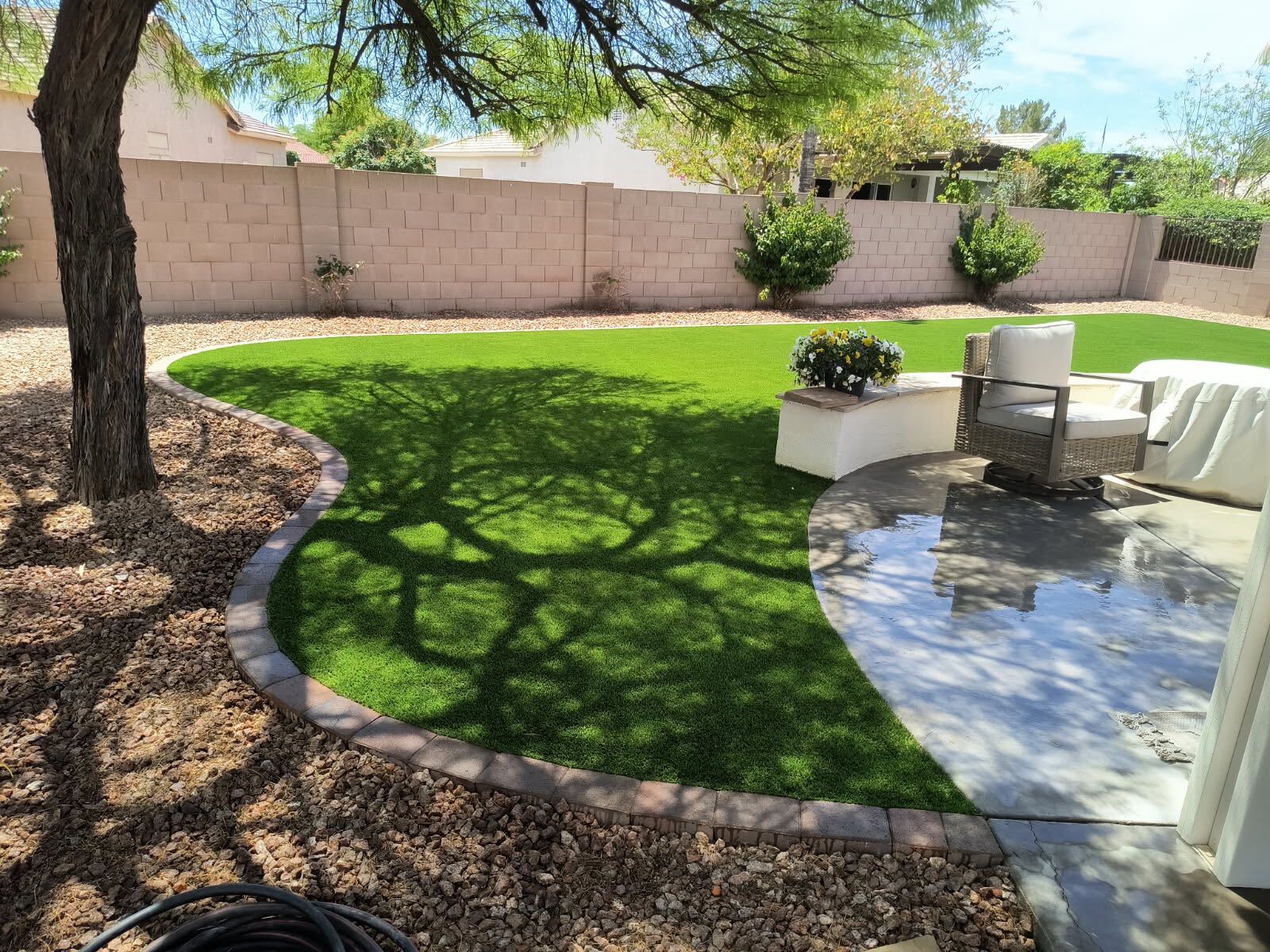
Residential Lawn
Standard backyard or front yard. Realistic look, good drainage, 20+ year lifespan with proper base prep.
Pet Turf
Antimicrobial infill, enhanced drainage layer, and turf selected for durability under heavy pet traffic.
Putting Greens
Contouring, multiple turf types for fringe and green surface, cup installation, and precision finish work.
Playground Turf
Impact-absorbing foam pad layer underneath, lead-free materials, ASTM-rated for fall height safety.
Hidden Costs to Watch For
Reputable installers quote these upfront. Less reputable ones discover them "during the project." Ask about each of these before signing anything:
- Demo and removal of existing grass, sod, or gravel landscape (often $0.50–$1.50/sq ft extra)
- Irrigation system capping or removal — required before turf goes in, and often overlooked in initial estimates
- Slope grading to ensure positive drainage away from the home's foundation
- Tree root management — roots under the base will cause ripples over time if not addressed
- HOA approval fees or required permits (uncommon but worth confirming in your city)
- Seam tape and adhesive — often not itemized but real costs in larger installations
Is It Worth It? The ROI of Artificial Turf in Arizona
Arizona homeowners who switch to artificial turf report water savings of $600–$1,200 per year on average, depending on yard size and prior irrigation habits. Over a 20-year lifespan, that's $12,000–$24,000 in water savings alone — potentially covering the entire cost of installation before factoring in any appreciation in home value.
Beyond water: no mowing (save $800–$1,500/yr in service fees or your own time), no fertilizer, no re-seeding after the summer or winter kills your grass, and no muddy paws tracked through the house. Real grass in Arizona requires constant intervention. Artificial turf is genuinely, meaningfully low maintenance.
Resale value is harder to quantify, but consistently cited by Arizona real estate agents as a strong positive — especially in markets where drought restrictions are tightening and water costs are rising year over year.
How to Get an Accurate Quote in Arizona
The most accurate quote comes from a physical site visit — not an online calculator and not a phone estimate. Any reputable installer will walk your yard, measure the space, assess the base condition, and discuss your goals before committing to a number. Be skeptical of quotes given without a site visit.
When comparing quotes, make sure you're comparing the same scope: same turf grade, same base depth, same infill type, and same warranty terms. A quote that looks 30% cheaper may be using thinner base prep or a lower-grade turf that won't last.
Get Design Consultation